Can You Buy a Home in the United States Without Being a U.S. Citizen?
For many international buyers, one of the first questions about purchasing real estate in the United States is simple:
Do I need to be a U.S. citizen to buy a home?
In many cases, the answer is no.
Non-U.S. citizens may be able to purchase and own residential real estate in the United States. The IRS even provides specific tax guidance for foreign buyers and sellers of U.S. property. However, ownership rules, financing options, documentation requirements, and tax responsibilities can vary depending on the buyer, the property’s location, and the type of loan being used.

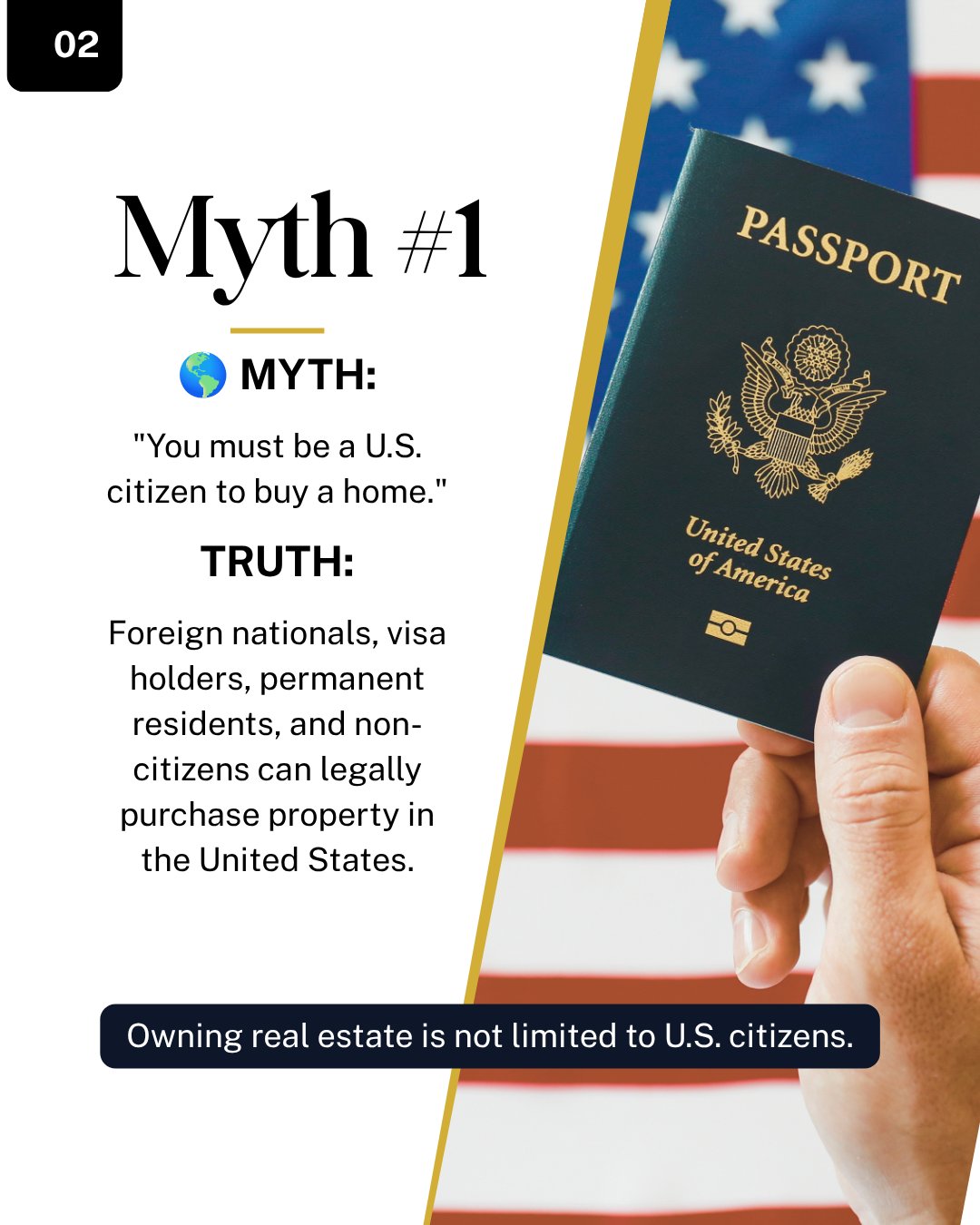
Myth No. 1: You Must Be a U.S. Citizen to Buy a Home
U.S. citizenship is not a universal requirement for purchasing residential real estate.
Depending on their circumstances, lawful permanent residents, eligible visa holders, non-permanent residents, and international buyers living outside the United States may be able to purchase property.
However, this does not mean that every buyer can purchase every type of property in every location. Certain federal national-security rules and some state laws may restrict real estate purchases involving particular foreign persons, countries, agricultural properties, military areas, or critical infrastructure. Buyers should confirm the rules in the state where they plan to purchase.
It is also important to understand that purchasing a home does not provide citizenship, permanent residency, a visa, or permission to remain in the United States. Property ownership and immigration status are separate legal matters.
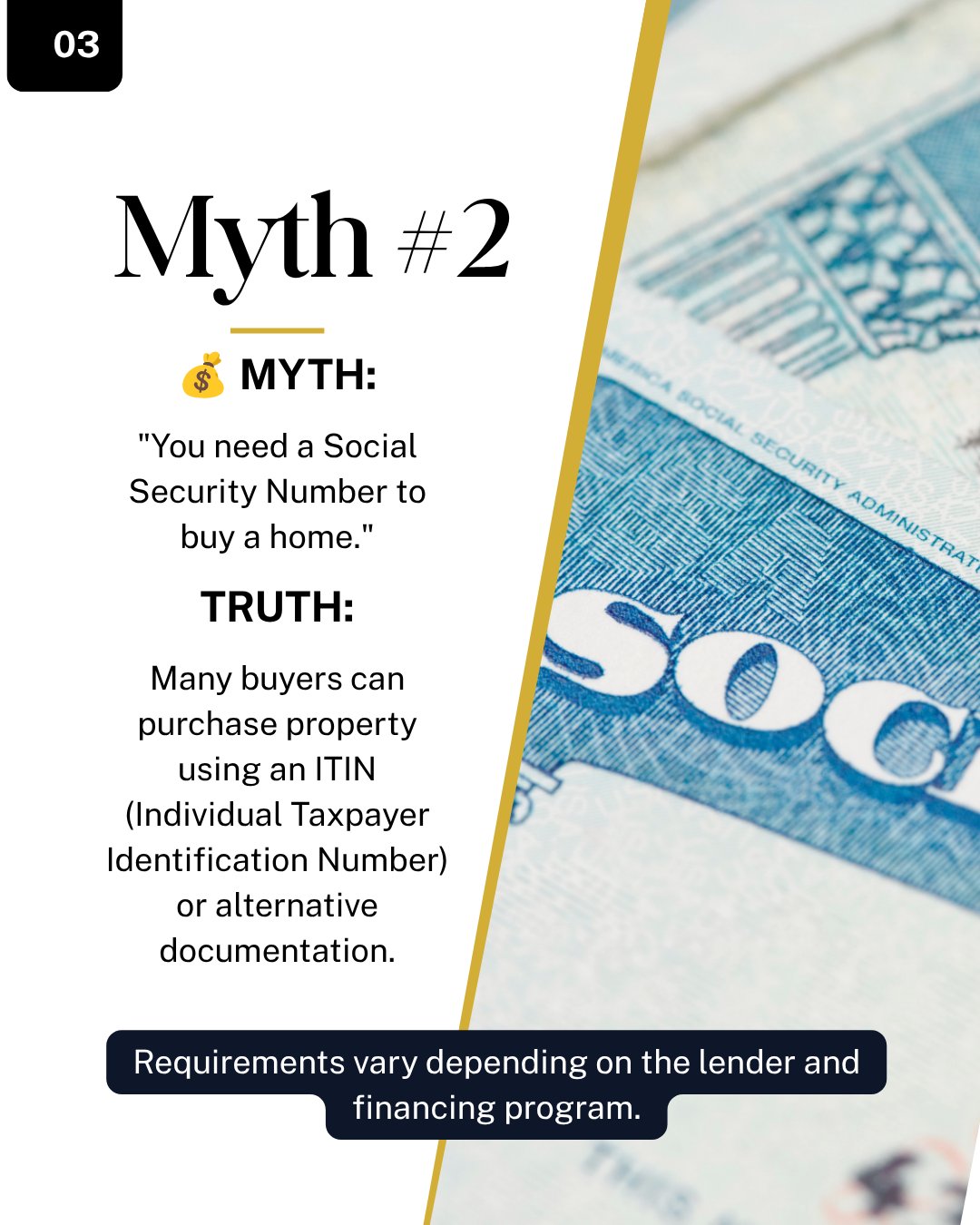
Myth No. 2: You Need a Social Security Number to Buy a Home
A Social Security number is not always the only identification number that can be used in a real estate transaction.
The IRS issues Individual Taxpayer Identification Numbers, or ITINs, to certain individuals who need a U.S. taxpayer identification number but are not eligible for a Social Security number. The IRS also provides ITIN guidance specifically for foreign buyers and sellers of U.S. real estate.
An ITIN should not be confused with immigration authorization. It is used for federal tax administration and does not provide legal immigration status, employment authorization, or Social Security benefits.
An ITIN also does not guarantee mortgage approval. Some banks and mortgage companies offer ITIN loan programs, but these loans may have different credit, down-payment, reserve, interest-rate, and documentation requirements than conventional financing. Federal banking guidance recognizes ITIN mortgages as a type of nonconforming mortgage loan.
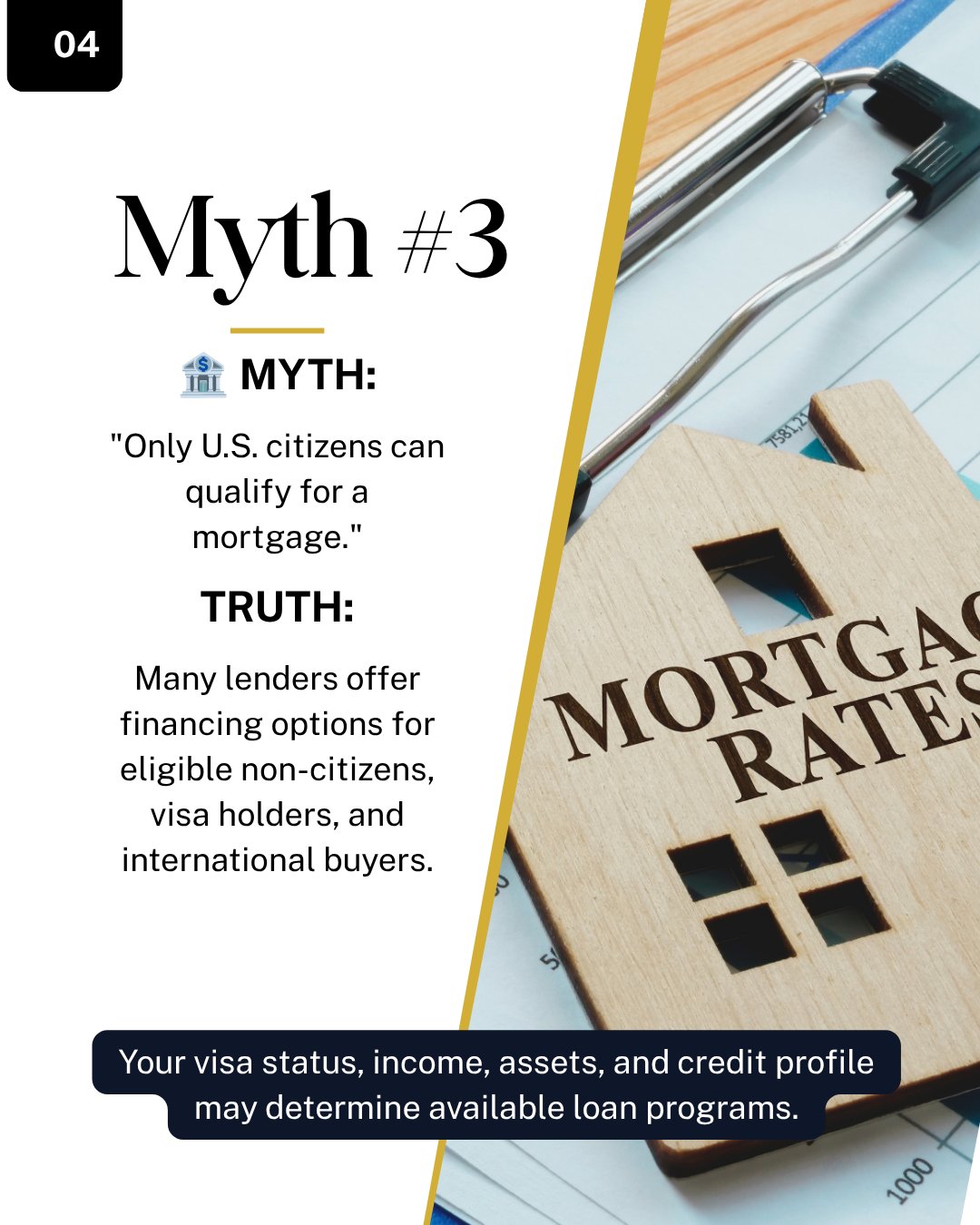
Myth No. 3: Only U.S. Citizens Can Qualify for a Mortgage
Mortgage eligibility is not limited exclusively to U.S. citizens, but the rules vary considerably among lenders and loan programs.
Conventional financing
Fannie Mae’s current guidelines permit mortgages for lawful permanent residents and lawful non-permanent residents under the same general terms available to U.S. citizens. The lender is responsible for confirming that the borrower is legally present and obtaining the documentation it considers appropriate.
FHA financing
FHA guidelines changed in 2025. For FHA case numbers assigned on or after May 25, 2025, non-permanent residents are generally no longer eligible for FHA-insured financing. Lawful permanent residents may still qualify when they meet the program’s other requirements and provide evidence of their status.
USDA financing
USDA home-loan programs have their own citizenship and immigration requirements. Eligible applicants generally must be a U.S. citizen, a U.S. non-citizen national, or a person who meets the program’s qualified-alien requirements.
ITIN and foreign-national financing
Buyers who do not qualify for conventional or government-backed loans may be able to explore an ITIN mortgage, foreign-national loan, portfolio loan, or another nonconforming option. Availability depends on the lender, property, occupancy plans, borrower documentation, and overall financial profile.

Homeownership May Be More Accessible Than You Think
Being unfamiliar with the U.S. real estate process should not prevent someone from exploring homeownership.
Permanent residents, eligible visa holders, ITIN holders, and other international buyers may have paths to purchasing property. The first step is understanding the buyer’s legal, financial, and documentation circumstances and assembling a team that understands international transactions.
That team may include an experienced real estate professional, mortgage lender, closing or title professional, tax adviser, and, when needed, a real estate or immigration attorney.
Ready to Explore Your Options?
Every buyer’s situation is different. Before assuming that citizenship, visa status, or the lack of a Social Security number prevents you from purchasing a home, speak with professionals who can review your specific circumstances.
Have questions about buying a home in the United States? Contact Guerra & Associates Realty to begin the conversation and learn more about the homebuying process.
Website disclaimer
This article is provided for general educational purposes only and is not legal, immigration, tax, or lending advice. Property ownership laws and mortgage requirements vary by state, lender, loan program, and individual circumstances. Buyers should consult qualified legal, tax, immigration, and mortgage professionals before making a purchase or financing decision.